
The Ultimate Guide to Mumbai Monorail: Routes, Fares, and Local Secrets
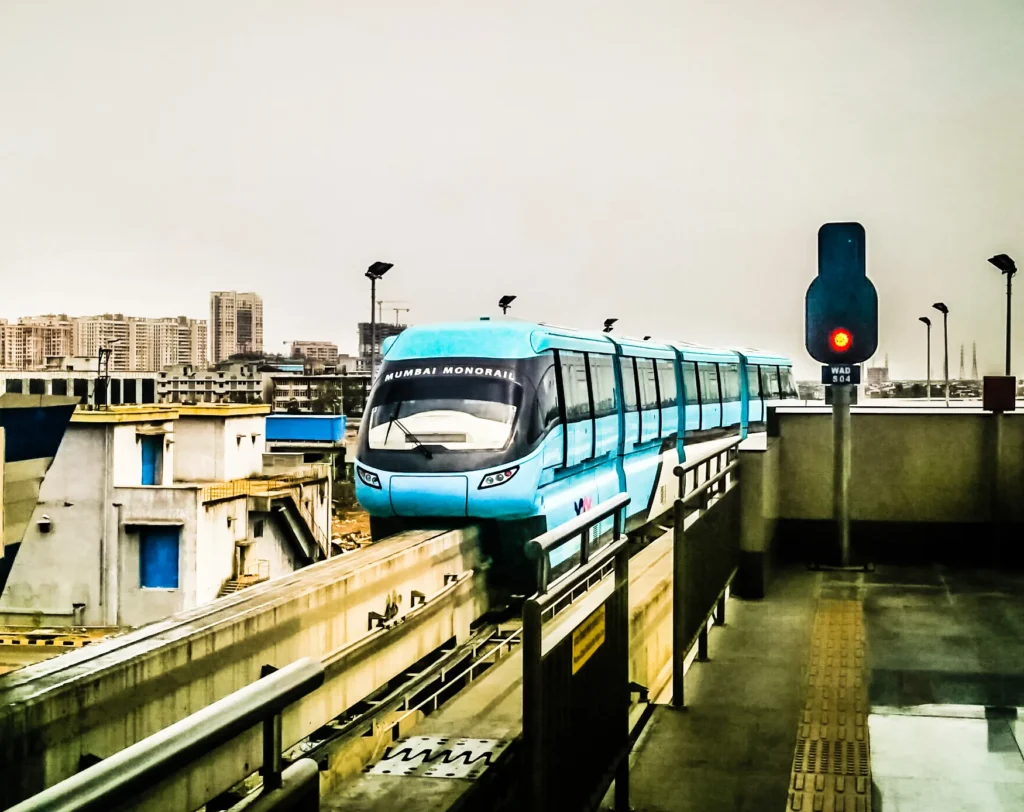
While the local trains and the Metro grab most of the headlines, Mumbai is also home to India’s very first monorail system. Elevated high above the city’s narrowest and most congested streets, the Mumbai Monorail offers a futuristic way to travel through the heart of central and eastern Mumbai. It is a “hidden gem” of the city’s transport network that provides a unique perspective of the Mumbai skyline.
In this comprehensive guide, I will walk you through everything you need to know about the Mumbai Monorail—from the latest monorail fare 2025 to its role as a vital feeder service. Whether you are a daily commuter or a tourist looking for a “joyride” with a view, this guide is for you!
1. Introduction & Overview
The Mumbai Monorail is a specialized rapid transit system that runs on a single elevated rail. Unlike the heavy local trains, the monorail is designed to navigate sharp curves and narrow stretches where traditional rail or metro tracks simply cannot fit.
This travel option is perfect for local Mumbai people living in areas like Antop Hill or Chembur, and for tourists who want to see the city’s diverse landscape—from salt pans to skyscrapers—from a height. It serves as an important “feeder” service, helping people reach the larger railway and metro networks.
2. Why the Monorail Is Important in Mumbai
- Narrow Lane Accessibility: It reaches parts of Central Mumbai where the roads are too narrow for heavy infrastructure.
- Scenic Travel: Because it is elevated, it offers some of the best panoramic views of the city, making it a favorite for photography enthusiasts and first-time visitors.
- De-congesting Roads: It provides an alternative to the crowded BEST buses and slow-moving traffic on the roads below.
- Connection Hub: It links the Western Line, Central Line, and Harbour Line together at different points, acting as a bridge between the different railway arteries.
3. History & Background
Mumbai made history on February 1, 2014, when it inaugurated India’s first monorail. The project was developed by the MMRDA to bridge the transit gap in the eastern suburbs.
It opened in two phases: the first connecting Wadala to Chembur and the second extending the line all the way to Sant Gadge Maharaj Chowk (Jacob Circle) in South Mumbai. While it faced many technical challenges and delays, it has recently undergone a “revival” with new, locally-made train sets and better frequency.
4. Types & Features
The Mumbai Monorail is a single-line system with specific features:
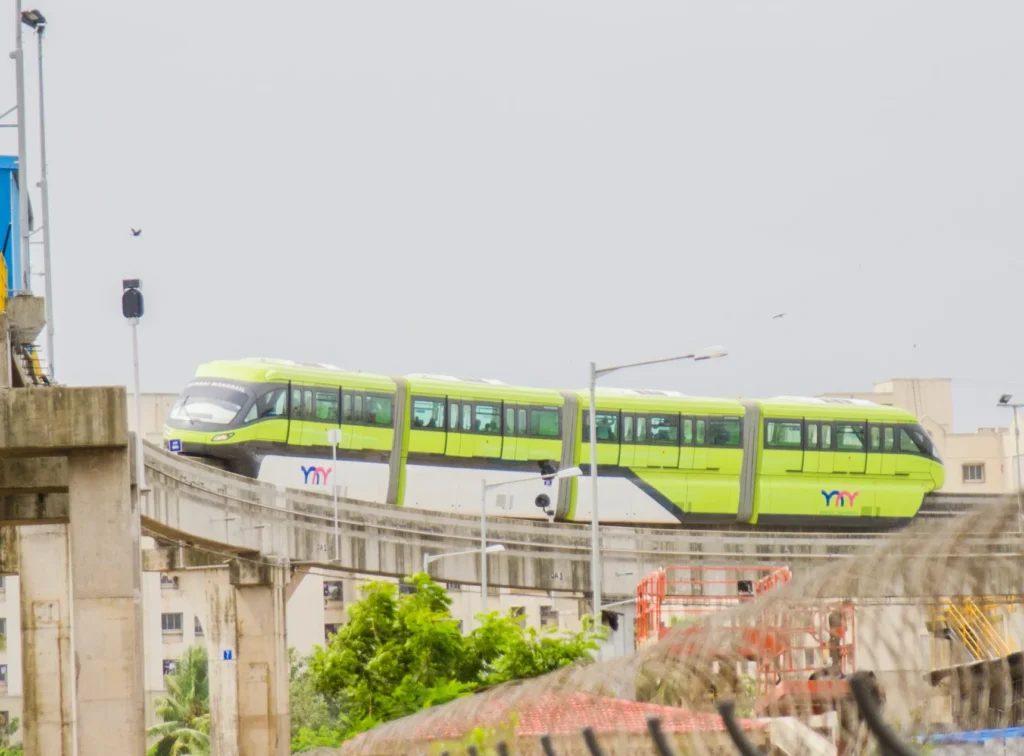
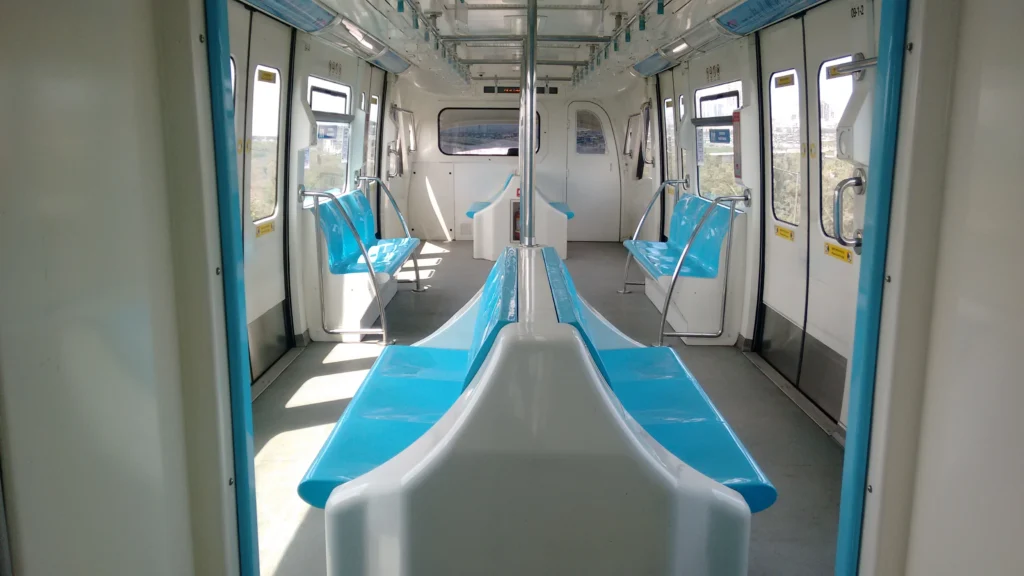
- Fully Air-Conditioned: Every train consists of four coaches that are fully climate-controlled, providing a cool escape from Mumbai’s heat.
- Aesthetic Design: The trains are known for their bright colors (pink, green, and blue) and large viewing windows.
- Modern Rolling Stock: While the initial trains were from Malaysia, new “Made in India” trains are now being introduced to improve reliability and speed.
5. How to Use the Mumbai Monorail
- Locate the Station: Look for the tall, sleek concrete pillars with a single rail on top. Most stations are located in the center of the road.
- Security Check: Similar to the Metro, you must pass through a security scan before entering the ticket area.
- Tickets: Purchase a token or a QR-coded ticket at the counter.
- Boarding: Follow the signs to the platform. Stand behind the yellow line. Security guards often manage the boarding to ensure people exit before you enter.
6. Ticket System Explained
The Monorail ticketing system is straightforward and affordable.
Fare Table 2025:
- 0 – 4 Stations: ₹10
- 5 – 10 Stations: ₹20
- 11 – 15 Stations: ₹30
- More than 15 Stations: ₹40
Booking Options:
- Tokens/Paper QR: The most common way for occasional travelers.
- Mumbai 1 Card: You can use your National Common Mobility Card (NCMC) here, just like on the Metro and BEST buses, for a seamless “tap-and-go” experience.
Return Journey Tickets (RJT): You can buy a return ticket at your starting station to save time on the way back.
7. Travel Timings & Frequency
- Operating Hours: Generally from 6:00 AM to 11:00 PM.
- Frequency: Trains usually run every 15 to 18 minutes. During peak hours, the frequency is being improved as new trains are added to the fleet.
- Best Time for Tourists: 12:00 PM to 4:00 PM. The trains are emptier, allowing you to move around and enjoy the views from all sides of the coach.
8. Routes & Coverage Area
The 19.54 km route includes 17 stations:
- Key Stops: Sant Gadge Maharaj Chowk (Jacob Circle), Lower Parel, Dadar East, Wadala Depot, Mysore Colony, and Chembur.
- Interchanges:
- Chembur: For the Harbour Line.
- Currey Road/Dadar: Near the Central Line.
- Jacob Circle: Connects near the Western Line (Mahalaxmi) and the new Metro Line 3 (Aqua Line).
9. Cost & Budget Information
The Monorail is one of the cheapest ways to travel for middle-distance trips.
- A full end-to-end trip (Chembur to Jacob Circle) costs only ₹40.
- Discounts: Senior citizens, students (up to 12th standard), and differently-abled passengers can avail of a 25% discount on trip passes with valid ID proof.
10. Tourist Experience & Local Tips
- The “Front View”: If you can, stand at the very front or very back of the train. The glass panels offer a “driver’s eye view” of the track ahead, which is a fantastic experience for kids and tourists.
- Bhakti Park View: The stretch around Bhakti Park offers views of the sprawling salt pans and the Eastern Freeway—a side of Mumbai many tourists never see.
- Integrated Travel: Use the Monorail to reach the Lower Parel business district or the Wadala area to avoid the heavy road traffic.
11. Safety Risks & Things to Be Careful About
- Technical Snags: Historically, the monorail has had occasional power failures or technical delays. Always have a backup (like an auto or bus) if you are in a massive hurry.
- Gap Safety: Be careful of the gap between the platform and the train when boarding.
- Mind the Doors: The doors are automatic; do not try to force them open or block them.
12. Safety Precautions
- CCTV Surveillance: All stations and trains are equipped with cameras for passenger safety.
- Security Personnel: Guards are present at every station to guide you and maintain order.
- Women’s Safety: During late hours, women are advised to sit in coaches where other passengers are present.
13. Things to Carry
- NCMC Card / Smart Card: To avoid standing in ticket lines.
- Mobile Phone/Camera: You will definitely want to take photos of the view!
- Water: While the trains are AC, the platforms are elevated and can get warm while you wait.
- Light Bag: Heavy luggage is generally discouraged on the monorail.
14. Travel Tips (Local Secrets)
- The “Lowe Parel” Hack: If you work in Lower Parel and live in Chembur, the Monorail is a much more comfortable (and often faster) option than taking two different local trains.
- Combine with Metro: With the new merger and foot-over-bridges, you can now plan a “Loop Trip” using the Metro and Monorail together to see the whole city in a day.
- Wait for the New Rakes: If you see one of the newer, shinier trains approaching, try to board that—they have better air-conditioning and more comfortable seating.
Forget the hassle and choose CABTAN—Mumbai’s most punctual and affordable cab service. Our trained drivers ensure a safe, reliable, and completely worry-free journey. Fill out the form below to book your ride now..