
The Ultimate Guide to Mumbai Auto Rickshaws: Fares, Rules, and Local Secrets
If the local train is the heartbeat of Mumbai, the auto rickshaw is its nervous system. These nimble, three-wheeled black-and-yellow vehicles are everywhere in the suburbs, weaving through traffic like professional athletes. For a traveler, they are the most iconic way to get around the “City of Dreams.”
In this comprehensive guide, I’ll explain everything—from the mumbai auto rickshaw fare 2025 to the mysterious “Bandra-Sion” boundary where autos suddenly disappear. Whether you are a local or a tourist, this guide will make you an expert on Mumbai auto rickshaw travel.
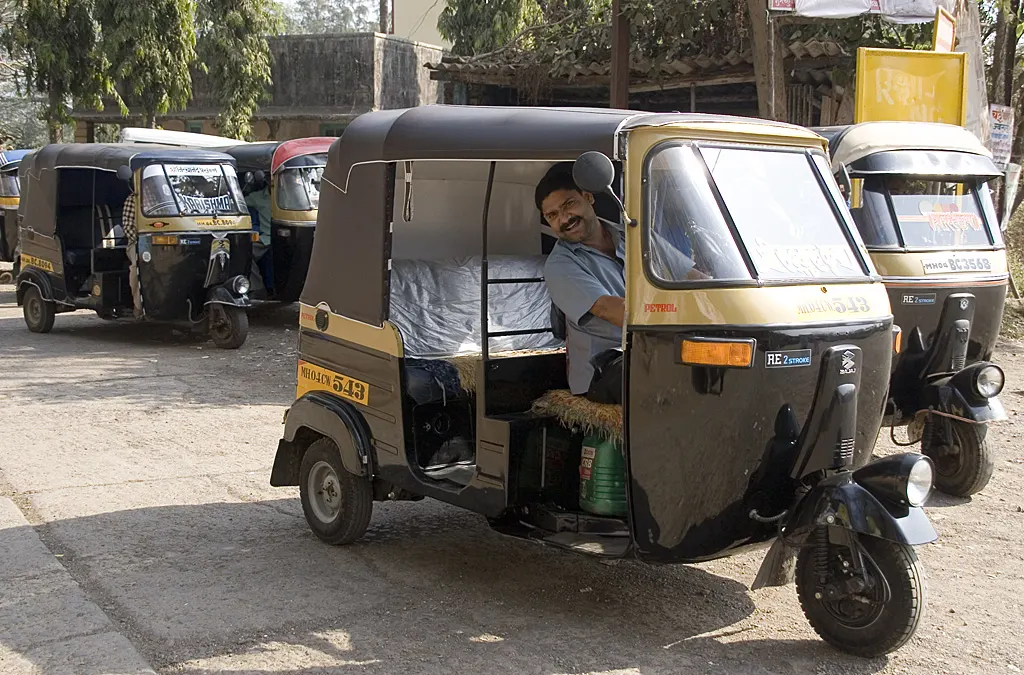
1. Introduction & Overview
A Mumbai auto rickshaw (or “rick” as locals call it) is a small, motorized three-wheeler that can seat three passengers in the back. Unlike the private taxis or luxury cars, autos are open-air, allowing you to feel the sea breeze and the city’s chaotic energy.
They are the primary mode of “last-mile connectivity.” This means if you get off at a railway station and need to reach your house or office 2 kilometers away, the auto is your best friend. They are fast, affordable, and can squeeze through narrow lanes that a car could never navigate.
2. Why This Vehicle Is Important in Mumbai
- Availability: In the suburbs, you don’t find an auto; the auto finds you. They are available at almost every street corner.
- Cost-Effective: The mumbai auto fare is one of the cheapest in the world for a private door-to-door service.
- Time-Saving: They can take shortcuts through “gallis” (lanes) to bypass the heavy traffic on the main roads.
- Authentic Experience: You haven’t truly seen Mumbai until you’ve sat in a rickshaw during the monsoon, watching the rain pour while your driver expertly dodges puddles.
3. History & Background
Auto rickshaws were introduced to Mumbai in the late 1950s and early 60s. Before them, people relied on horse-drawn carriages or expensive taxis. Over the years, they became a symbol of middle-class Mumbai.
An interesting historical fact is the “South Mumbai Ban.” Decades ago, to prevent traffic congestion in the narrow streets of the island city (South Mumbai), the government restricted auto rickshaws to the suburbs only. This is why you will see thousands of autos in Bandra, but not a single one at the Gateway of India!
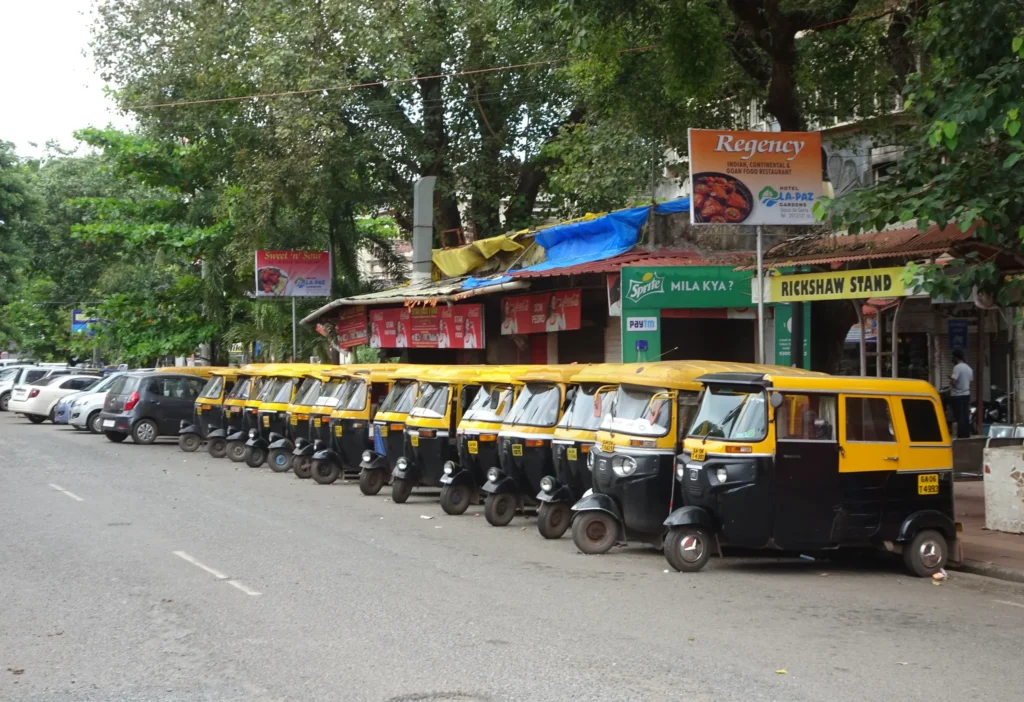
4. Types & Classes
While all Mumbai autos look similar, there are two ways to use them:
- Metered Rickshaws (Private): You hail an empty auto, and the driver is legally required to “drop the meter.” You pay exactly what the meter says (plus any night surcharges).
- Share-a-Rickshaw: Common outside railway stations. You share the seat with two other strangers and pay a fixed small amount (e.g., ₹10 or ₹20) per seat. It’s the cheapest way to travel for short distances.
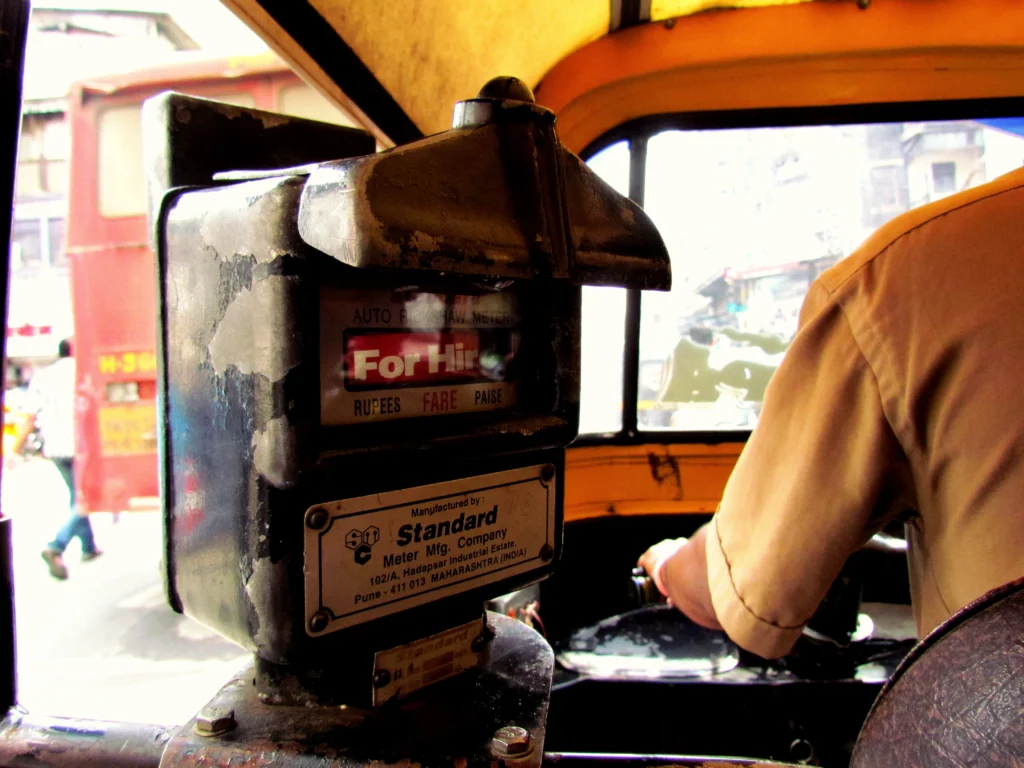
5. How to Use a Mumbai Auto Rickshaw
- Hailing: Stand on the side of the road and wave your hand at an approaching auto with a “For Hire” flag or light up.
- State Your Destination: Before getting in, tell the driver where you want to go. While most are helpful, some might refuse if the destination is too close or too far (though technically illegal).
- The Meter: Ensure the driver resets the meter to the minimum fare (currently ₹26).
- Google Maps: If you are a tourist, keep your GPS on. It helps you ensure the driver isn’t taking a “scenic” (longer) route to increase the fare.
6. Fares Explained (2025 Update)
There are no “tickets” for autos; you pay the driver directly at the end of the trip.
Fare Calculation 2025
- Minimum Fare: The base price for the first 1.5 km is ₹26.
- Per Km Rate: After the first 1.5 km, you pay approximately ₹17.14 per km.
- Night Surcharge: From 12:00 Midnight to 5:00 AM, there is a 25% additional charge on the total meter reading.
- Waiting Charges: If you are stuck in heavy traffic, the meter will slowly increase based on time.
Payment Methods
- Cash: Always carry small change (₹10, ₹20, and ₹50 notes). Drivers often “don’t have change” for ₹500 notes.
- UPI/QR Codes: Most drivers now have a QR code (GPay, PhonePe) pasted behind their seat. It’s very convenient!
7. Travel Timings & Frequency
- 24/7 Service: Unlike the local trains that stop at 1 AM, autos run all night.
- Peak Hours: 8:30 AM – 11:00 AM and 6:00 PM – 9:00 PM. During these times, it is very hard to find an empty auto, and traffic is at its worst.
- Pro Tip: If you can’t find an auto during rush hour, use the Uber or Ola apps to book an “Auto.” It might cost a few rupees more in booking fees, but it guarantees a ride.
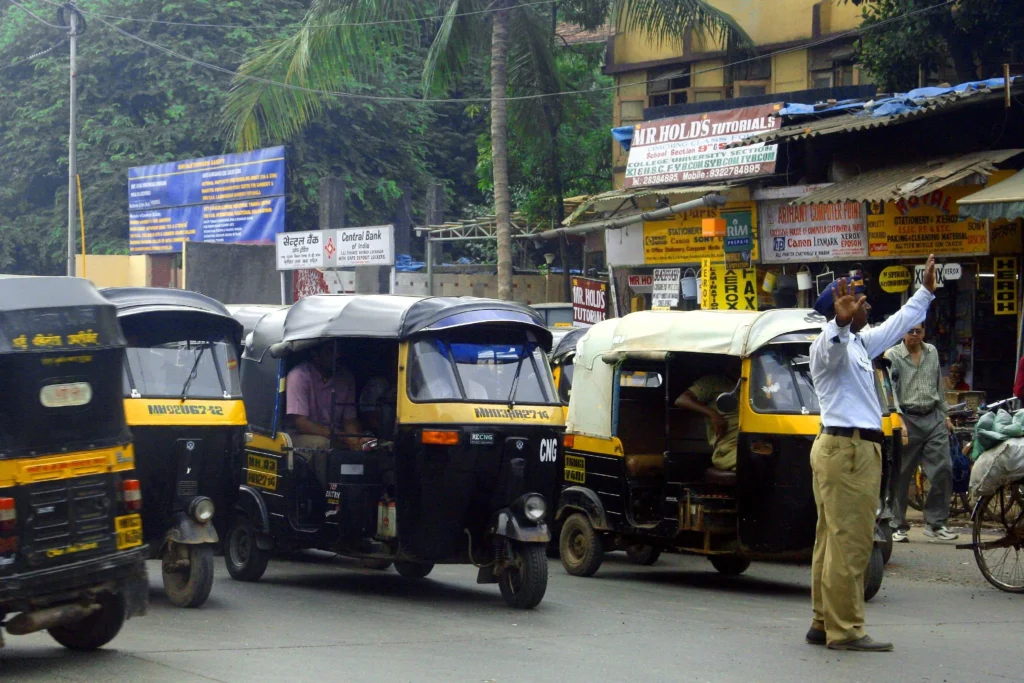
8. Routes & Coverage Area (The “No-Go” Zone)
This is the most important rule for tourists: Auto rickshaws are only allowed North of Bandra and Sion.
- Allowed Areas: Bandra, Andheri, Juhu, Borivali, Ghatkopar, Powai, Thane, and Navi Mumbai.
- Banned Areas (South Mumbai): Worli, Dadar, Prabhadevi, Lower Parel, Byculla, Marine Drive, and Colaba.
- The Boundary: If you are in an auto in Bandra and want to go to Dadar, the driver will drop you at the Mahim Causeway or Sion Station. You must then switch to a “Kaali-Peeli” taxi or the local train to continue south.
9. Cost & Budget Information
- A 5 km trip usually costs around ₹85–₹90.
- A 10 km trip costs approximately ₹170–₹180.
- Luggage: You might be charged ₹6 per large bag if it takes up significant space. Small handbags are free.
10. Tourist Experience & Local Tips
- The “Meter Card”: Every driver must carry a tariff card. If you suspect the meter is rigged, ask to see the official mumbai auto fare chart.
- The “M-Indicator” App: Just like for trains, this app has an “Auto/Taxi” section that calculates the exact fare between two points so you don’t get cheated.
- Seat 4 is a No: In share autos, drivers sometimes try to squeeze a 4th person next to them. This is uncomfortable and unsafe—avoid it.
11. Safety Risks & Things to Be Careful About
- Rash Driving: Some drivers think they are in a “Fast & Furious” movie. If you feel scared, politely say, “Bhaiya, thoda dheere chalao” (Brother, please drive slowly).
- Pickpockets: Since the sides are open, keep your phone and bag away from the edge. “Bike snatchers” sometimes grab phones from passengers’ hands in slow traffic.
- Overcharging at Night: Some drivers at stations may demand a “fixed price” instead of using the meter. Always insist on the meter.
12. Safety Precautions
- Note the Number: The vehicle registration number is written on the dashboard and the back of the auto. Take a photo or note it down, especially if traveling alone at night.
- Share Live Location: If you are a foreign traveler or a woman traveling late, use WhatsApp to share your live location with a friend.
- Back Seat Only: Always sit in the back. Never sit on the small edge next to the driver.
13. Things to Carry While Traveling
- Face Mask/Scarf: Mumbai is dusty and polluted. A scarf helps protect your face from exhaust fumes.
- Sunglasses: To protect against the glare and dust.
- Power Bank: Using GPS and UPI payments drains your battery.
- Small Change: As mentioned, ₹10 and ₹20 notes are like gold in a rickshaw.
14. Travel Tips (Local Secrets)
- The “Opposite Side” Trick: If you are at a busy station and can’t find an auto, cross the road to the opposite side. Drivers heading away from the station are more likely to agree to a ride.
- Avoid the “Main Road”: If the main road is jammed, ask the driver, “Andar se le lo?” (Can you take the inner lanes?). Most local drivers know amazing shortcuts.
- Rainy Day Strategy: In heavy rain, autos are better than taxis because they don’t get “hydro-locked” as easily in flooded streets, but be prepared to get a little wet from the sides!
Forget the hassle and choose CABTAN—Mumbai’s most punctual and affordable cab service. Our trained drivers ensure a safe, reliable, and completely worry-free journey. Fill out the form below to book your ride now.