
The Ultimate Guide to Mumbai Metro: Lines, Smart Cards, and Seamless Travel
If you want to skip the legendary Mumbai traffic and travel in cool, air-conditioned comfort, the Mumbai Metro is your best bet. While the local trains are the city’s old soul, the Metro is its modern, sleek face. It is fast, efficient, and rapidly expanding to connect every corner of this bustling metropolis.
In this comprehensive guide, I’ll take you through everything you need to know—from the Mumbai Metro fare 2025 to the newly opened Aqua Line and the essential Mumbai 1 card. Whether you are a local heading to BKC or a tourist exploring South Mumbai, this is how you navigate the city like a pro!
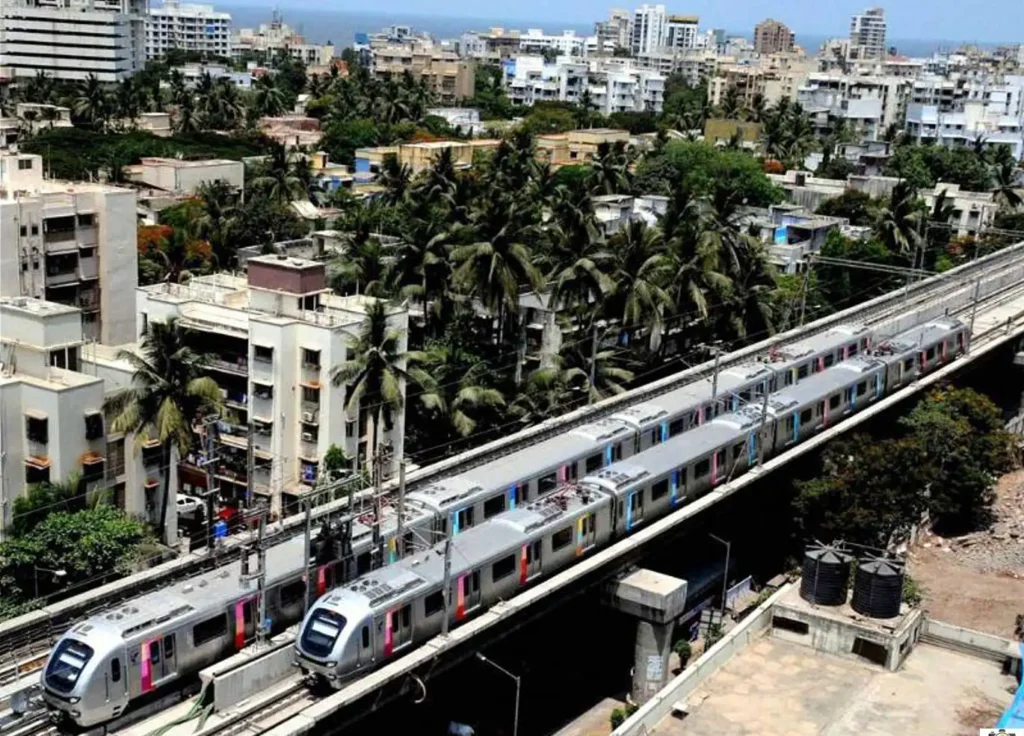
1. Introduction & Overview
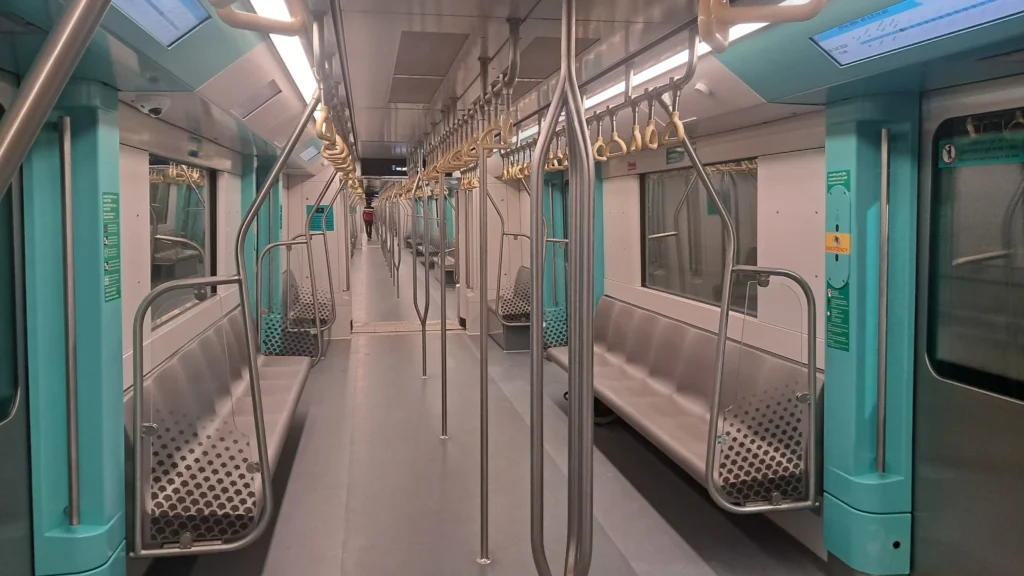
The Mumbai Metro is a high-speed rapid transit system designed to decongest the city’s roads and overburdened railway lines. Unlike the open-air local trains, every single Metro train is fully air-conditioned and equipped with automatic doors for maximum safety and comfort.
This system is perfect for anyone who values time and a “sweat-free” journey. It’s a top choice for office goers, students, and foreign travelers who want a predictable and modern travel experience.
2. Why the Metro Is Important in Mumbai
- Beats the Traffic: What takes 90 minutes by road can often be covered in just 20 minutes by Metro.
- Climate Controlled: In Mumbai’s humid heat or heavy monsoons, the air-conditioned coaches are a lifesaver.
- Safety: With CCTV surveillance, platform screen doors (on new lines), and security staff at every station, it is one of the safest ways to travel.
- Interconnectivity: The Metro lines are designed to connect directly with major suburban railway stations like Andheri, Ghatkopar, and Dadar.
3. History & Background
The journey began with Line 1 (Blue Line), which opened in June 2014, connecting the east and west for the first time. Since then, the network has grown into a massive multi-line project. A major milestone was reached in October 2025, when the first fully underground line—the Aqua Line (Line 3)—became completely operational from Aarey to Cuffe Parade, changing the way people reach South Mumbai forever.
4. Types of Metro Services & Lines
Currently, Mumbai has several key operational lines:
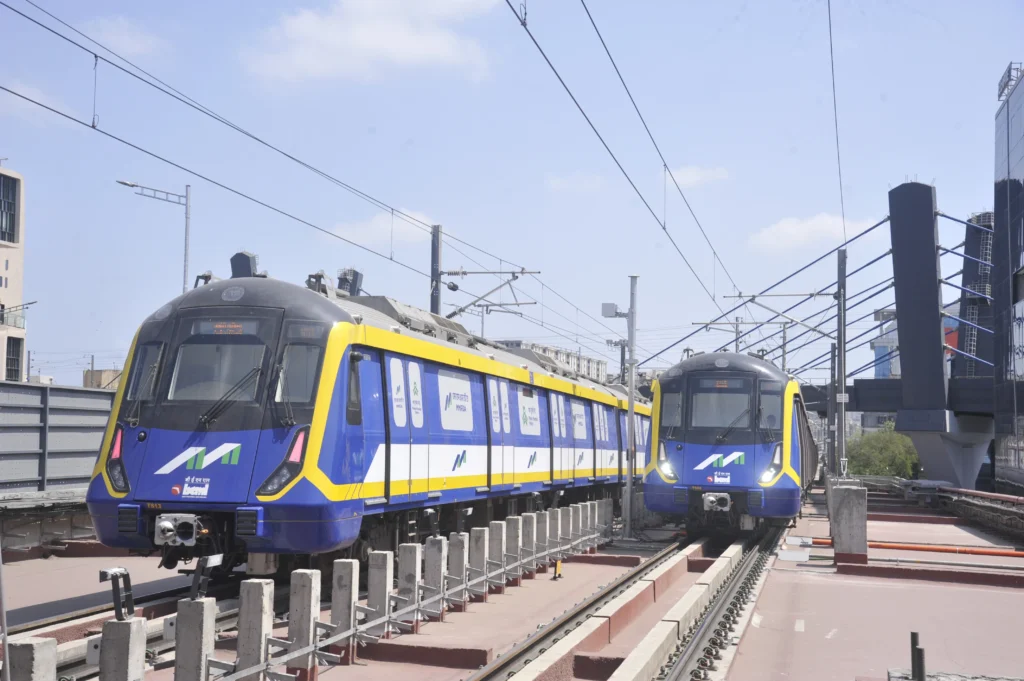
- Line 1 (Blue Line): Versova – Andheri – Ghatkopar. This is the busiest line, connecting the Western and Central railways.
- Line 2A (Yellow Line) & Line 7 (Red Line): These run along the Link Road and Western Express Highway, serving the northern suburbs like Dahisar, Borivali, and Andheri East/West.
- Line 3 (Aqua Line): The city’s first fully underground metro. It connects the northern suburbs to the business hubs of BKC and the heritage districts of South Mumbai (Colaba/Cuffe Parade).
5. How to Use the Mumbai Metro
- Find Your Station: Use apps like M-Indicator or the Mumbai 1 App to find the nearest station.
- Security Check: All passengers must go through a quick baggage scan and frisking by security personnel (CISF or local security).
- Tickets/Tokens: Buy a QR-coded paper ticket, a plastic token, or use your smart card.
- The AFC Gates: Tap your card or scan your QR code at the Automatic Fare Collection (AFC) gates to enter the platform area.
- Boarding: Stand behind the yellow line and allow passengers to exit before you board.
6. Ticket System Explained (2025 Update)
Mumbai has moved toward a “One Nation, One Card” system for seamless travel.
Ways to Pay:
- Mumbai 1 (NCMC) Card: This is a prepaid smart card you can use across Metro Line 1, 2A, 7, and 3, and even on BEST buses. You can get it at any Metro station with a simple ID proof.
- WhatsApp Ticketing: For Lines 2A & 7, you can book tickets by simply sending “Hi” to 86526 35500 on WhatsApp.
- Mobile QR Tickets: Use the Mumbai 1 App, Paytm, or Ridlr to buy digital tickets and avoid queues.
- Paper QR / Tokens: Available at ticket counters for single or return journeys.
Fare Range:
- Fares are distance-based, typically starting at ₹10 and going up to ₹80.
- Smart Card Discount: Using a smart card usually gives you a 5% to 10% discount on every trip.
7. Travel Timings & Frequency
- General Hours: Trains usually run from 5:30 AM to 11:30 PM.
- Frequency: During peak hours, a train arrives every 3 to 5 minutes. During off-peak hours, it’s every 7 to 10 minutes.
- Best Time for Tourists: Between 11:00 AM and 4:00 PM for a relaxed, uncrowded journey.
8. Major Routes & Coverage Area
- West to East: Take Line 1 to get from the beaches of Versova to the shopping hubs of Ghatkopar.
- North to South: The Aqua Line (Line 3) is now the fastest way to get from the International Airport (T2) to Cuffe Parade or Churchgate.
- Suburban Loop: Lines 2A and 7 form a massive loop in the northern suburbs, perfect for reaching areas like Juhu, Malad, and Borivali without using the highway.
9. Cost & Budget Information
- Cheapest Way: For regular travel, the Trip Pass (45 or 60 days) offers the best value for money.
- Tourist Pass: If you are visiting for a day or three, ask for the Unlimited Tourist Pass at the counter.
- Children: Kids below 3 feet (approx. 3 years old) usually travel for free.
10. Tourist Experience & Local Tips
- Airport Connectivity: Use the CSMIA T2 station on Line 3 for direct, underground access to the international airport terminal.
- Escalator Etiquette: Stand on the left and leave the right side free for those who wish to walk.
11. Safety Risks & Things to Be Careful About
- Underground Connectivity: On the new Aqua Line 3, mobile signals can be weak or non-existent in the deep underground sections. Download your tickets/maps beforehand!
- Overcrowding: Platforms can get very busy during office hours. If a train is too full, just wait—the next one is only minutes away.
- Forbidden Items: Don’t carry raw meat, fish, or inflammable items; they are strictly prohibited.
12. Safety Precautions
- Ladies Coach: Every train has a dedicated coach for women. Look for the signs on the platform to know where to stand.
- Emergency Contact: Use the Passenger Emergency Communication Unit (PECU) inside the train to talk to the driver if there’s an issue.
- Yellow Line: Never cross the yellow line on the platform until the train has come to a complete stop.
13. Things to Carry
- NCMC / Smart Card: It saves you from standing in ticket lines every time.
- ID Proof: Essential if you are buying or replacing a smart card.
- Small Backpack: Most stations have baggage scanners; a smaller bag makes the security check faster.
- Cash: Keep some small change handy just in case the digital payment systems have a technical glitch.
14. Travel Tips (Local Secrets)
- The “Aqua Line” Shortcut: If you are heading to South Mumbai from the airport, the underground Metro 3 is now much faster and cheaper than any taxi.
- Interchange Ease: The Andheri and Ghatkopar stations have dedicated walkways to the suburban railway platforms, making it easy to switch between Metro and Local trains.
- Avoid Peak “Dadar”: If you are using the Metro to reach Dadar, be prepared for heavy crowds as it is a major interchange point.
Forget the hassle and choose CABTAN—Mumbai’s most punctual and affordable cab service. Our trained drivers ensure a safe, reliable, and completely worry-free journey. Fill out the form below to book your ride now.