
The Ultimate Guide to BEST Buses in Mumbai: Routes, Fares, and Local Secrets
While the local train is the city’s heart, the BEST bus network is the blood that reaches every single corner of Mumbai. Run by the Brihanmumbai Electric Supply and Transport undertaking, these iconic red buses are the most affordable and reliable way to explore the city’s hidden lanes, seaside promenades, and busy markets.
In this guide, I will simplify everything you need to know about the BEST bus Mumbai system—from the latest BEST bus fare 2025 to the futuristic electric double decker bus and the essential Chalo App. Whether you’re a daily commuter or a tourist looking for a budget-friendly city tour, this guide has you covered.
1. Introduction & Overview
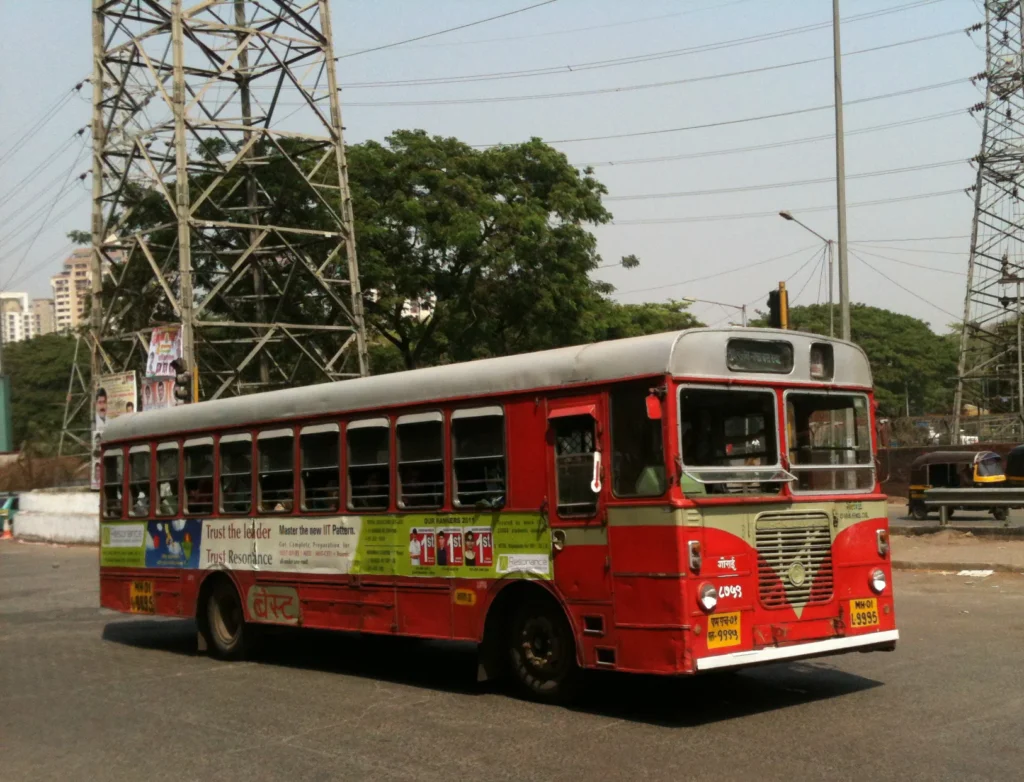
The BEST bus is Mumbai’s massive public road transport system. With thousands of buses and hundreds of routes, it connects areas where the local trains don’t go. If you see a bright red bus (or a sleek new white-and-red electric one), that’s your ride!
This travel option is perfect for local Mumbai people going to work, students heading to college, and tourists who want to see the city at a slower, more observational pace. It is the most “human” way to travel, allowing you to see the real life of Mumbai through the bus window.
2. Why This Vehicle Is Important in Mumbai
- Massive Reach: It covers the entire city and even extends to neighboring areas like Thane, Mira-Bhayandar, and Navi Mumbai.
- Unmatched Economy: The BEST bus ticket price remains the cheapest way to travel for short and medium distances in the city.
- Beating the Heat: With a growing fleet of AC BEST buses, you can now travel in cool comfort even during Mumbai’s humid summers.
- Eco-Friendly Future: Mumbai is rapidly moving toward a green future, with plans to have a fully electric fleet of 8,000 buses by 2027.
3. History & Background
The story of BEST began way back in 1873 as a horse-drawn tram company. The first motorized bus made its debut on July 15, 1926, running between Afghan Church and Crawford Market.
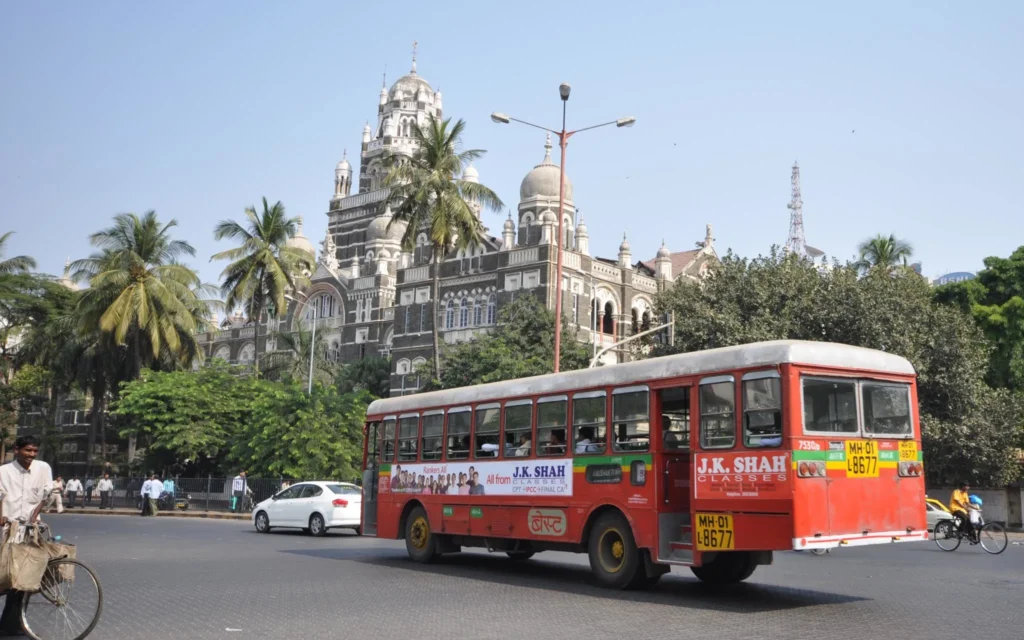
For decades, the iconic red double-decker bus was the symbol of the city. While the old diesel models are being retired, they have been reborn as India’s first electric double decker bus, preserving the city’s heritage while embracing modern technology. Today, BEST is not just a transport provider; it is an inseparable part of Mumbai’s identity.
4. Types & Classes of BEST Buses
When waiting at a bus stop, you’ll see several types of buses:
- Non-AC Regular Buses: The classic red buses. They are well-ventilated and the most affordable.
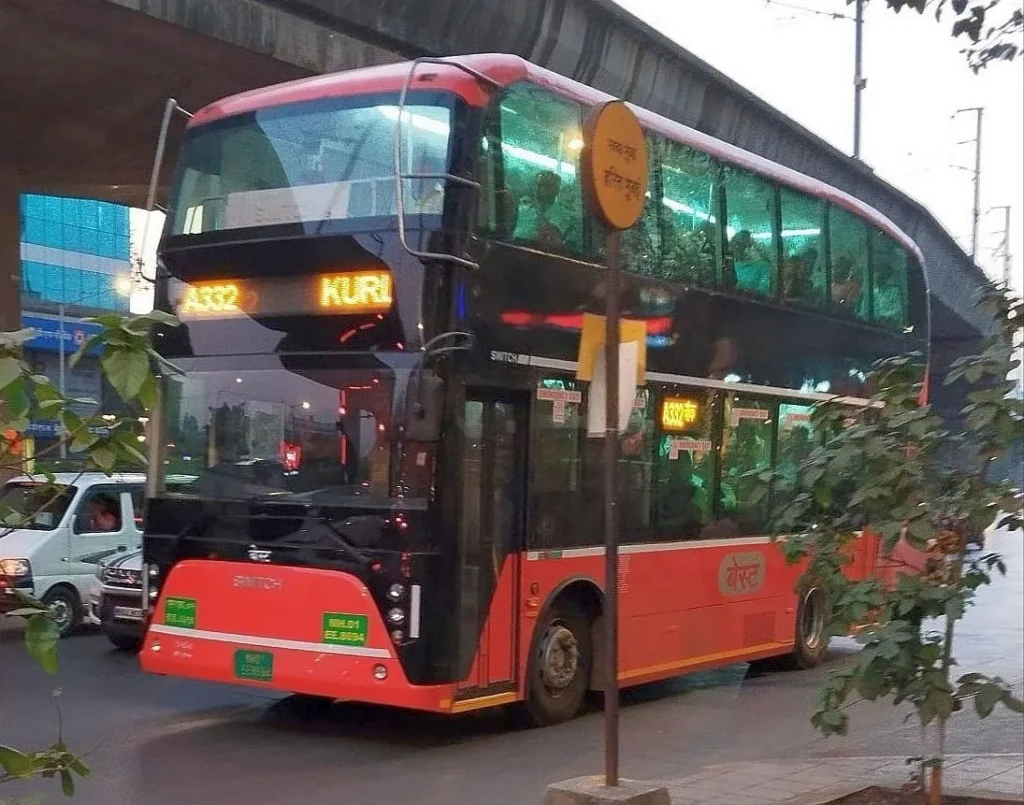
- AC Electric Buses: Modern, silent, and fully air-conditioned. Look for the “A” prefix before the route number (e.g., A-329).
- Electric Double Decker: These premium AC double decker buses are a favorite for tourists. They offer a great view from the top deck and use a “tap-in tap-out” digital ticketing system.
- Airport Express: Specially designed buses with extra luggage space that connect the Mumbai Airport to major hubs like Colaba, Thane, and Kharghar.
5. How to Use the BEST Bus
- Find Your Route: Use the Chalo App or M-Indicator to find which bus number goes to your destination.
- Boarding: Always board from the rear door and exit from the front door (except for some new electric buses and double-deckers that have different configurations).
- Buying the Ticket: As soon as you board, find the conductor (carrying a leather bag and a handheld machine) to buy your ticket. For digital buses, you may need to tap your Chalo Card at the door.
- The Bell: When your stop is approaching, the conductor usually rings a bell or you can request the driver to stop.
6. Ticket System Explained (2025 Update)
The BEST bus fare system has seen some changes recently.
Fare Prices 2025
- Non-AC Minimum Fare: ₹10 for the first 5 km.
- AC Minimum Fare: ₹12 for the first 5 km.
- Half Tickets: Children aged 5 to 12 are eligible for a 50% discount.
The Chalo App & Card
- BEST Chalo App: This is a must-have. You can book mobile tickets, buy a daily bus pass, or track your bus live so you don’t have to wait at the stop.
- Chalo Card: A tap-to-pay smart card that you can recharge. It eliminates the need to carry loose change.
- Super Saver Plans: If you are a regular traveler, these plans offer massive discounts on a set number of trips.
7. Travel Timings & Frequency
- Operating Hours: Most buses run from 5:00 AM to 11:00 PM. Some popular routes have “Limited Night Service.”
- Peak Hours: 8:30 AM – 11:00 AM and 5:30 PM – 9:00 PM. Buses can get very crowded during these times.
- Best Time for Tourists: 11:00 AM to 4:30 PM. You’ll easily find a seat, and the traffic is slightly better.
8. Major Routes & Coverage
The network is vast, but some important routes include:
- Route 115: A famous scenic route from CSMT to NCPA (Marine Drive).
- Route A-329: A new AC route connecting Shivaji Nagar to Andheri (East).
- Mumbai Darshan: Specialized tour buses that take you to all major tourist spots like Gateway of India, Juhu Beach, and Girgaon Chowpatty for a fixed daily rate (approx. ₹200–₹500).
9. Cost & Budget Information
- Daily Pass: For around ₹75, you can get an unlimited daily pass that works on all regular and AC routes.
- Monthly Pass: Unlimited monthly passes are available for approximately ₹1,800.
- Student/Senior Discounts: Special concessions are available via the Chalo Card.
10. Tourist Experience & Local Tips
- Sit on the Top Deck: If you find an electric double decker bus, head straight for the front row on the upper deck. It’s the best “budget” sightseeing tour in the world!
- Live Tracking: Use the Chalo App to see exactly how many minutes away your bus is. This saves you from standing in the hot sun at a bus stop.
- The “Exact Change” Rule: Local conductors often struggle with change for ₹100 or ₹500 notes. Always carry ₹10 and ₹20 notes, or better yet, use the Chalo Card.
11. Safety Risks & Things to Be Careful About
- Pickpockets: In crowded buses, keep your bag in front of you and be mindful of your pockets.
- The “Rush”: People often board or jump off moving buses. As a beginner, do not try this. Wait for the bus to come to a complete halt.
- Footboard Travel: Standing on the steps is dangerous and illegal. Always move inside the bus.
12. Safety Precautions
- Reserved Seating: Buses have dedicated seats for Ladies, Senior Citizens, and the Specially Abled. Even if the bus is full, you must vacate these seats if a rightful passenger boards.
- For Women: Many buses now have “Marshals” (security personnel) to ensure safety. Front seats are generally preferred for solo female travelers.
- Night Travel: Stick to well-lit bus stops and use the live tracking feature so you aren’t waiting alone for long.
13. Things to Carry While Traveling
- Small Cash/Coins: Essential if you aren’t using the app.
- Power Bank: Tracking routes and using digital tickets can drain your battery.
- Water Bottle: Stay hydrated in the Mumbai heat.
- Umbrella: A must-carry during the monsoon (June–September) as bus stops may not always offer full protection.
14. Travel Tips (Local Secrets)
- The “Window Seat” Strategy: On non-AC buses, the left-side window seats are better for avoiding the direct afternoon sun if you are traveling south in the morning.
- Skip the “Limited” during Rush: “Limited” (LTD) buses skip some stops to go faster, but they are often way more crowded. Sometimes a “Regular” bus following right behind is much emptier.
- Use the Airport Express: It is significantly cheaper than a taxi from the airport and uses the same high-quality AC buses.
Forget the hassle and choose CABTAN—Mumbai’s most punctual and affordable cab service. Our trained drivers ensure a safe, reliable, and completely worry-free journey. Fill out the form below to book your ride now.